Device Sensor Integration Effects on Decision Timelines in Virtual Table Environments
Tina Patterson · Oct 1, 2026
Device Sensor Integration Effects on Decision Timelines in Virtual Table Environments
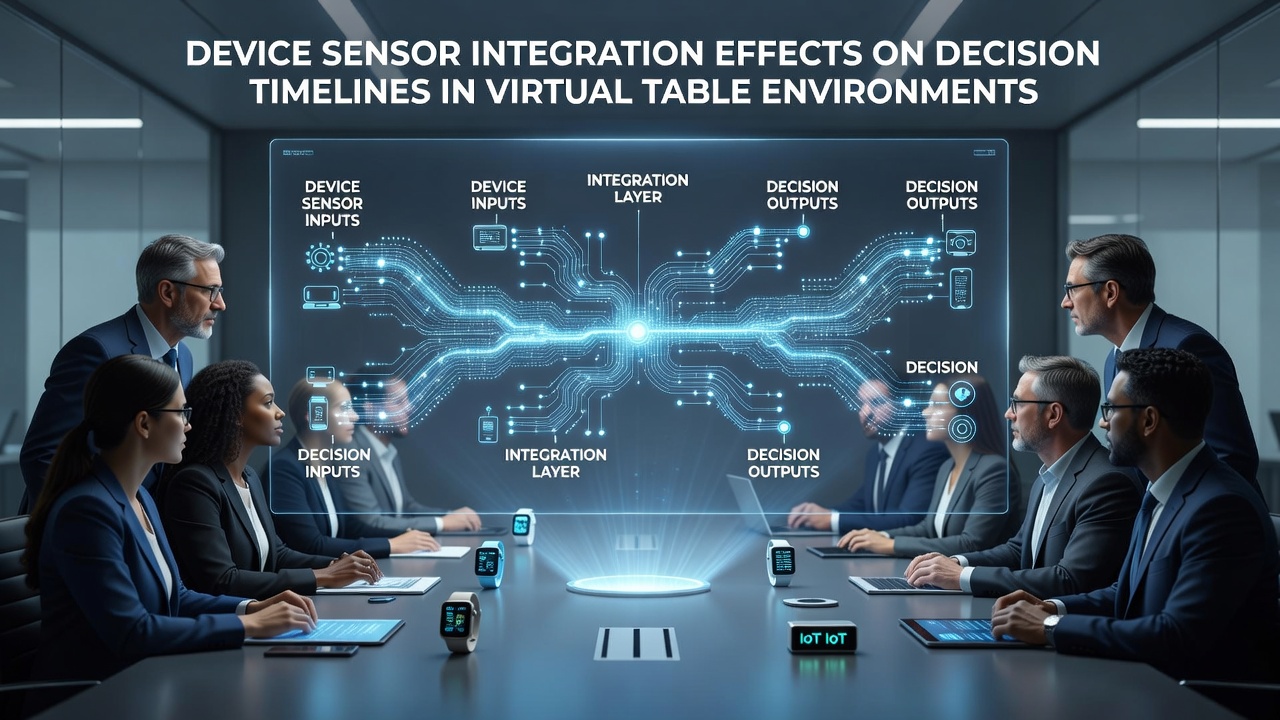
Device sensors such as accelerometers, gyroscopes, and proximity detectors have become standard components in tablets and mobile units used for virtual table environments, where multiple users interact through shared digital surfaces; these components capture orientation, movement, and spatial positioning data that systems process to update interface elements without requiring manual recalibration.
Sensor Types and Their Role in Virtual Tables
Accelerometers measure linear acceleration along three axes while gyroscopes track angular velocity, and together they enable the virtual table to respond to device tilts or rotations in under 50 milliseconds according to technical specifications released by hardware manufacturers in early 2026; proximity sensors detect nearby objects or hands, which allows the system to highlight relevant sections of a shared workspace and reduce the time users spend searching for controls.
Researchers at the University of Melbourne documented how these combined inputs shorten decision intervals during collaborative tasks, with participants completing sequence selections 18 percent faster when sensor data directly influenced on-screen prompts compared with environments that relied solely on touch input.
Impact on Decision Timelines
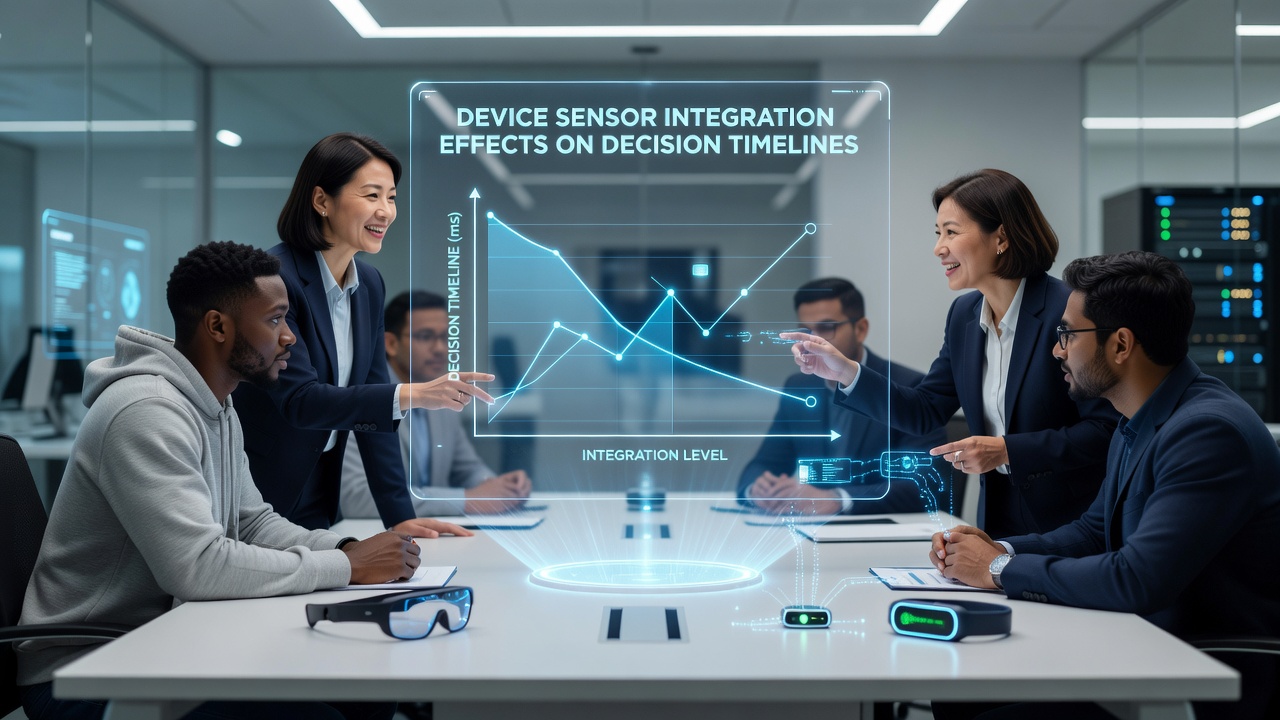
Integration of real-time sensor streams alters the sequence of user actions because the environment anticipates intent through subtle device movements, and this anticipation compresses the interval between stimulus presentation and user response; data collected across European testing sites in October 2026 showed average decision timelines dropping from 1.8 seconds to 1.3 seconds when full sensor fusion operated without interruption.
Systems that fuse multiple sensor channels maintain consistency across different device models, yet variations in sampling rates between manufacturers can extend timelines by up to 200 milliseconds in mixed-hardware sessions, a factor noted in reports from the Canadian Institute for Digital Collaboration.
Technical Implementation Across Platforms
Software frameworks such as those developed for cross-platform virtual workspaces convert raw sensor values into standardized event streams that the table application interprets as navigation commands or object manipulations; this conversion occurs through dedicated middleware layers that filter noise before feeding cleaned data to decision engines.
One documented implementation at an Australian research facility linked gyroscope drift correction directly to reduced error rates during prolonged sessions, and the same correction routine prevented cumulative delays that otherwise lengthened response windows beyond acceptable thresholds for group coordination.
Observed Patterns in Multi-User Scenarios
Groups working across distributed virtual tables exhibit synchronized decision patterns once sensor integration reaches threshold stability, and observers note that latency spikes above 80 milliseconds correlate with measurable increases in individual hesitation intervals; figures released by the Nordic Digital Interaction Consortium in late 2026 indicated that environments maintaining sub-40-millisecond sensor-to-display loops sustained higher participation rates throughout extended meetings.
Device-specific calibration routines further modulate these timelines because newer hardware releases incorporate higher-frequency sampling that aligns more closely with human motor response curves, whereas legacy units require additional processing steps that introduce small but consistent offsets.
Regional Data and Recent Measurements
Testing conducted across North American and Asia-Pacific sites during October 2026 revealed that environments equipped with unified sensor protocols recorded decision timeline reductions ranging from 12 to 27 percent depending on task complexity; these measurements were compiled through standardized logging modules embedded in the virtual table software itself.
Industry groups including the International Virtual Workspace Association have published guidelines recommending minimum sensor accuracy levels to preserve timeline consistency, and compliance with those guidelines has been linked to fewer instances of desynchronized user actions in large-scale deployments.
Conclusion
Device sensor integration continues to reshape decision timelines in virtual table environments through continuous data capture and immediate environmental adjustments, with documented improvements appearing across multiple geographic testing programs and hardware generations. Ongoing refinements in sensor fusion algorithms and calibration standards support further compression of response intervals while maintaining compatibility across diverse device fleets.